
Community
Aided
Technology
By control panel builders, for control panel builders!
Does this sound familiar? Your ECAD software sales representative spends hours talking to you about “digital twins” and their benefits, whilst your customers simply hand over their circuit diagrams and design documents as PDFs.
If this sounds familiar to you, then you’ve come to the right place. Many others in the industry face the same challenge. A large proportion of all control panel builders have to work with PDF documents. There are many reasons for this, and it is certainly not going to change any time soon. Although the ECAD lobby keeps presenting this as the future, the idea fails simply because all ECAD systems use different data formats. Nor is there any sign of improvement on the horizon in this regard. On the contrary, the isolation of these systems from one another is increasing further with the cloud hype.
But we don’t want to dwell on the problem. We want to offer solutions. Our approach is based on a simple idea. Electrical engineering is highly regulated, and there are relevant regulations and standards for every aspect of it. This naturally includes the creation of circuit diagrams.
For international projects, relevant examples include IEC 81346 and its regional equivalents (e.g. DIN EN 81346, GB/T 5094), which provide a sound basis for international cooperation. In the USA, national systems such as ANSI/ISA-5.1 predominate, although these may in some cases be incompatible with IEC 81346. Companies operating in international markets often follow IEC 81346 to ensure universal comprehensibility, but adapt their documentation to regional standards within certain limits where necessary.
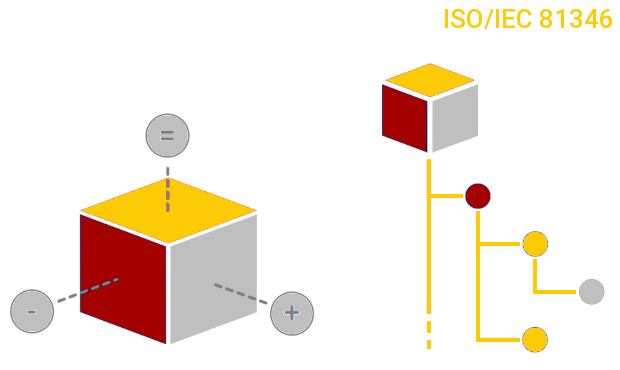
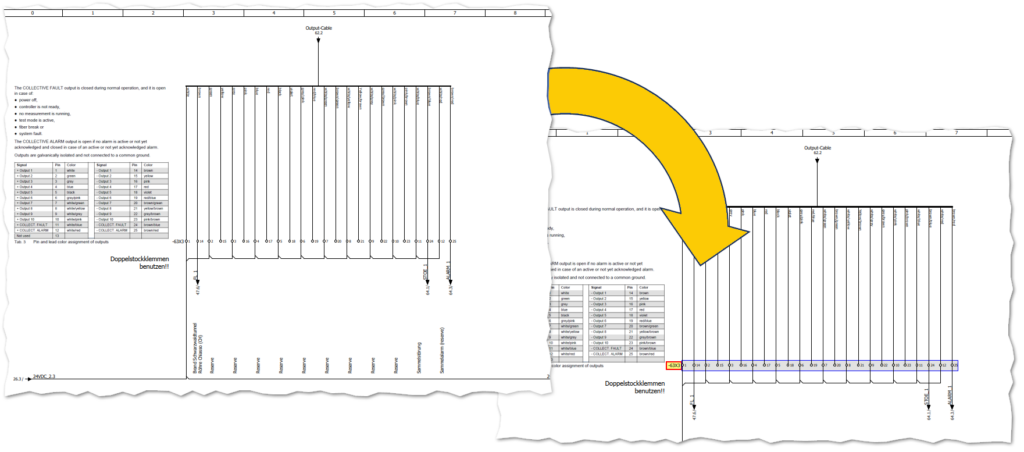
Such standardised procedures can always be easily reconstructed, meaning that circuit diagrams drawn up in accordance with these rules can, within certain limits, be readily interpreted. Good examples of how this reconstruction works are the labels for devices and terminal blocks.
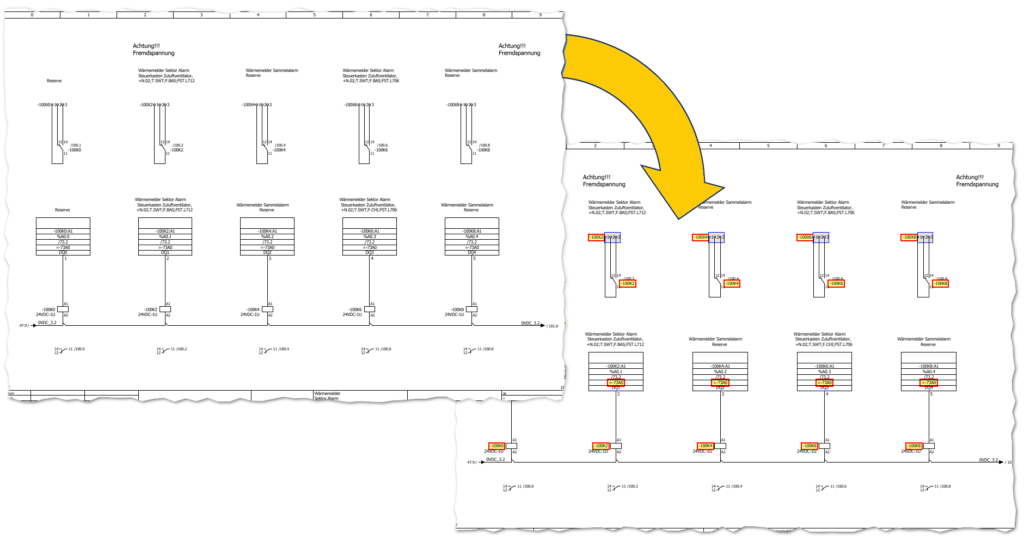
Device identification works well, but terminal labels can already be read too.
You are welcome to try out the system and download the latest version. It is completely free to use, and the software is released under the GPLv3 licence. You may use it freely for both personal and commercial purposes. However, please be sure to note the limitations regarding liability. You may view and evaluate the source code at any time and check it for possible errors and/or incompatibilities with your systems.